
Pregnant and Postpartum Women
Key Insight
"Pregnancy changes structure. Osteopathic care supports balanced adaptation. Gestational and postpartum phases involve progressive biomechanical, hormonal, and postural changes. Targeted osteopathic care supports physiological adaptation and functional comfort."
Overview
During pregnancy, ligamentous laxity, load redistribution, and postural compensation affect the pelvis, lumbar spine, and thoracic region. After delivery, the body undergoes further adaptation as tissues recover and load patterns normalize. These transitions may present with discomfort, restriction, or asymmetrical movement patterns. Osteopathic care focuses on restoring balanced mobility and supporting coordinated adaptation.
Appropriate For
• Pelvic girdle discomfort • Sacroiliac joint imbalance • Lumbar strain during pregnancy • Rib or thoracic restriction affecting breathing mechanics • Postpartum pelvic instability • Residual postural compensation following delivery
Clinical Focus
• Pelvic and sacroiliac mobility • Lumbar and thoracic load distribution • Fascial continuity • Neuromuscular tone regulation • Postpartum structural integration
Osteopathic Approach
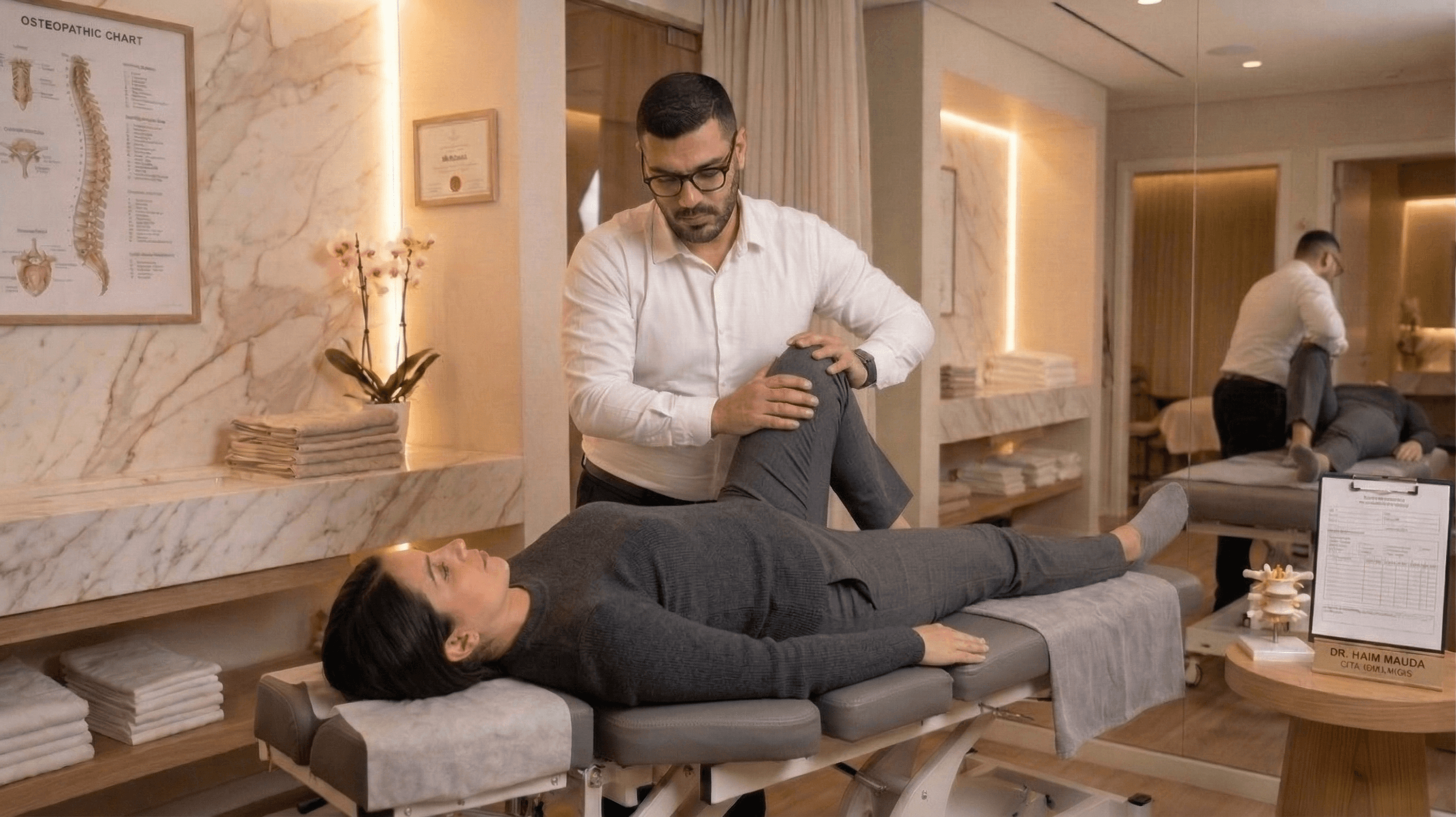
Care is adapted to gestational stage or postpartum phase, always non-invasive and controlled.
Techniques may include: ✔ Gentle articular mobilization (when indicated) ✔ Myofascial balancing ✔ Indirect positional techniques ✔ Pelvic functional correction ✔ Autonomic regulation strategies
What You Can Expect
- Improved pelvic mobility
- Reduced strain and tension
- Better load adaptation
- Enhanced postural balance
- Support during recovery phase